


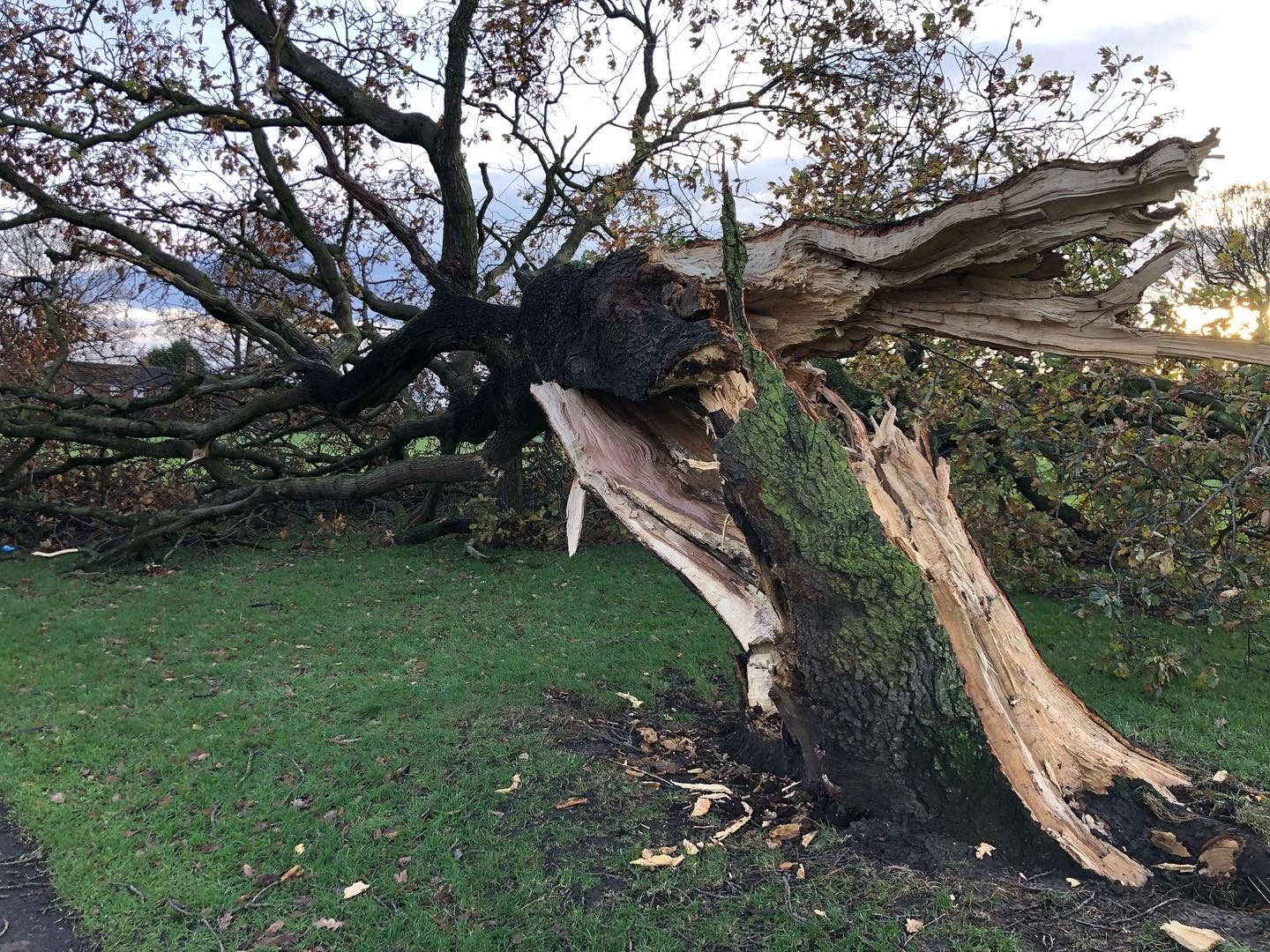


Tree surveys, risk assessment, consents and LOLER inspection.
Six service lines covering the life of a tree in a managed landscape: the constraint it places on a layout, the consent needed before touching it, and the day someone has to decide whether it stays.
BS5837 Tree Surveys for Planning
Tree constraints plans, arboricultural impact assessments, method statements and tree protection plans, written for submission and structured for the officer reading them.
BS 5837:2012 Trees in relation to design, demolition and construction About this service 02Tree Condition Surveys and Tree Inventories
Tree condition and inventory surveys from a single garden to an estate wide programme, captured as GIS data you keep and reuse.
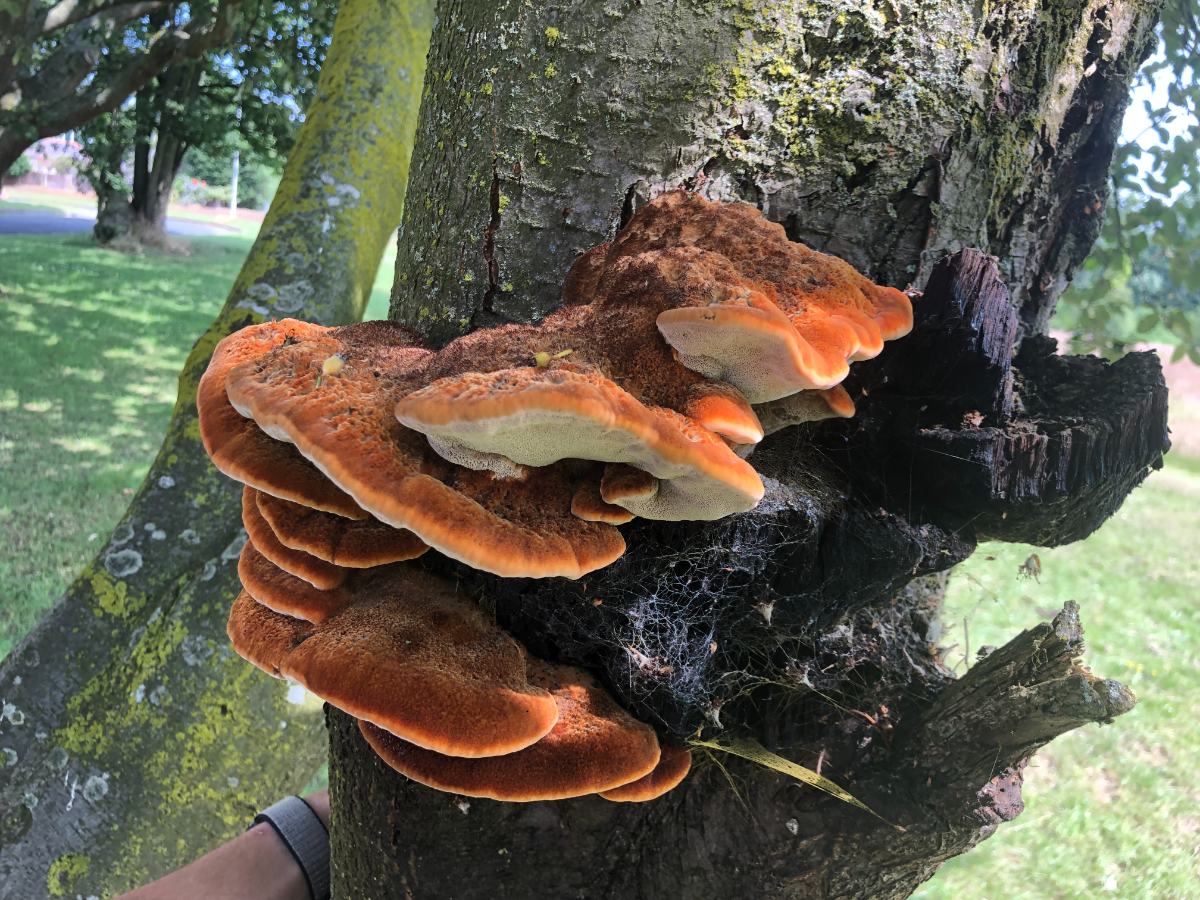
VTA principles, BS 8545 establishment monitoring About this service 03Tree Risk Assessment and Decay Detection
QTRA and TRAQ risk quantification, with sonic tomography, resistograph and aerial inspection when a visual assessment cannot settle it.
QTRA, ISA TRAQ, THREATS, NTSG guidance About this service 04Tree Preservation Order and Conservation Area Applications
Section 211 notices and TPO consent applications, with the arboricultural justification an officer can agree with.
Town and Country Planning (Tree Preservation) (England) Regulations 2012, section 211 About this service 05Mortgage, Homebuyer and Subsidence Tree Reports
Reports for lenders, insurers and solicitors on tree influence, clay shrinkage and subsidence risk, answering the retention your surveyor has flagged.
NHBC Standards Chapter 4.2, BRE Digest 298, BS 5837:2012 About this service 06LOLER Inspection of Climbing and Rigging Equipment
Independent thorough examination of climbing and rigging equipment, reported item by item with the inventory managed for you.
LOLER 1998 and PUWER 1998 About this serviceA cavity is a question. A tomogram is an answer.
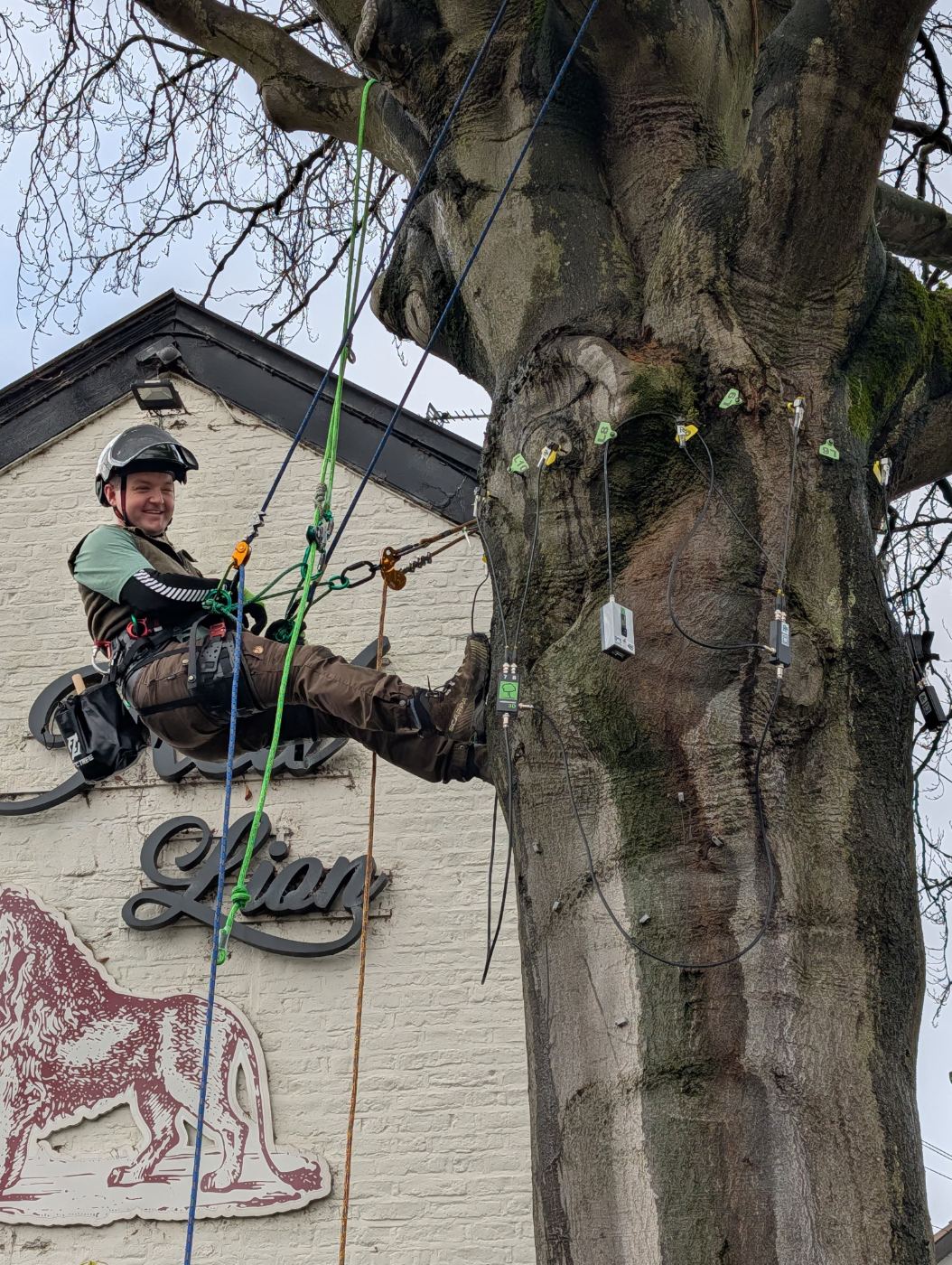
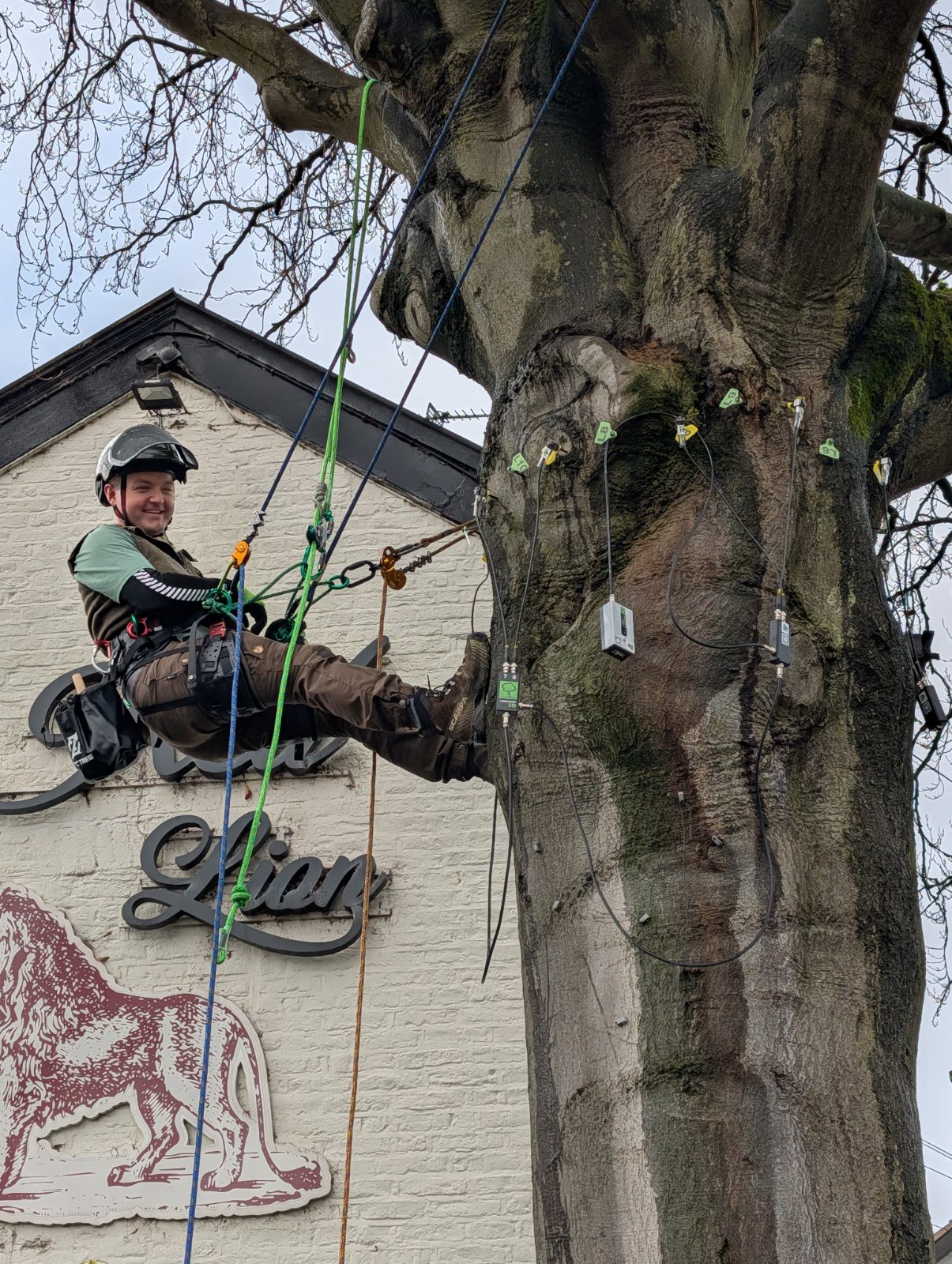
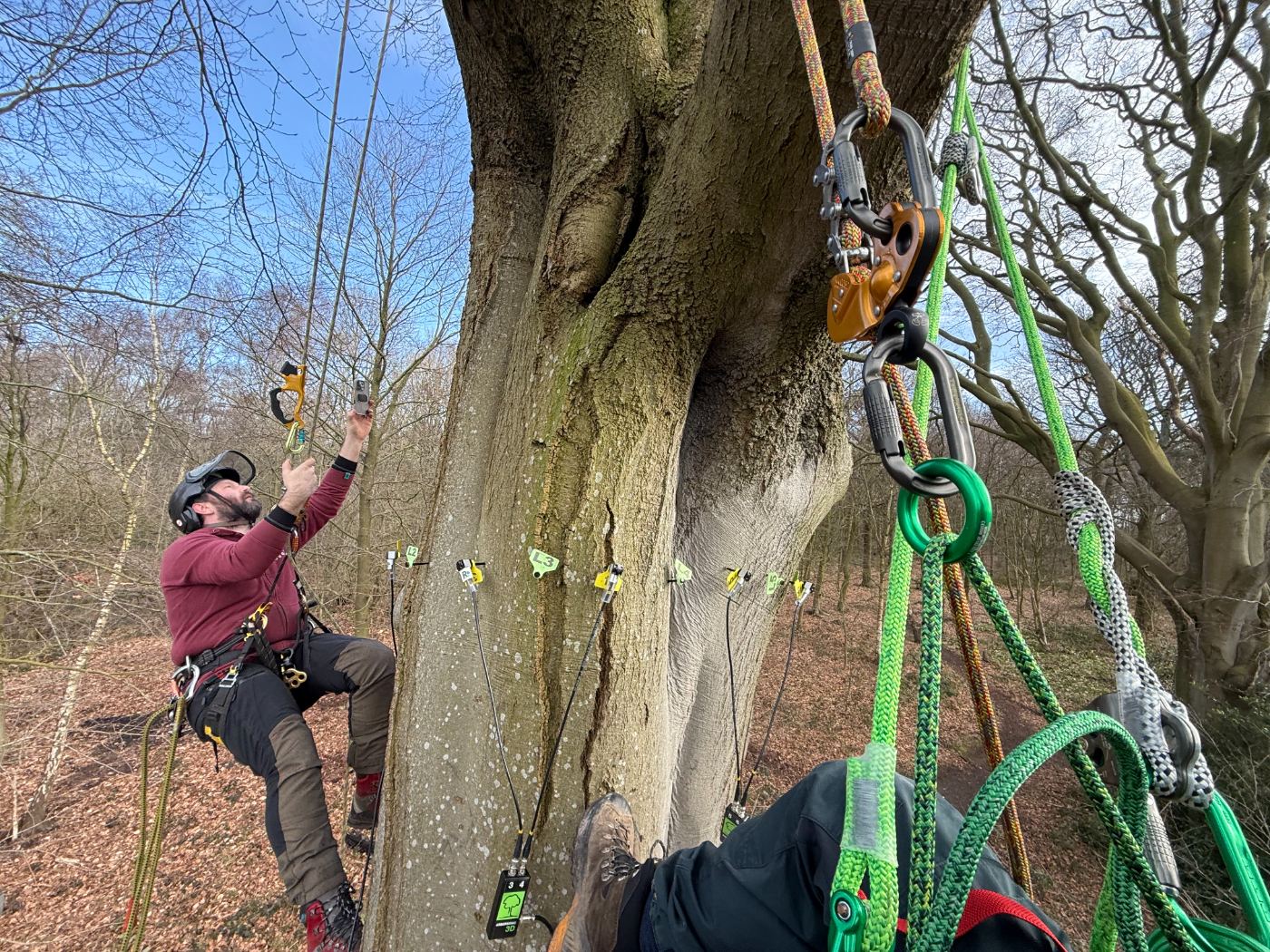
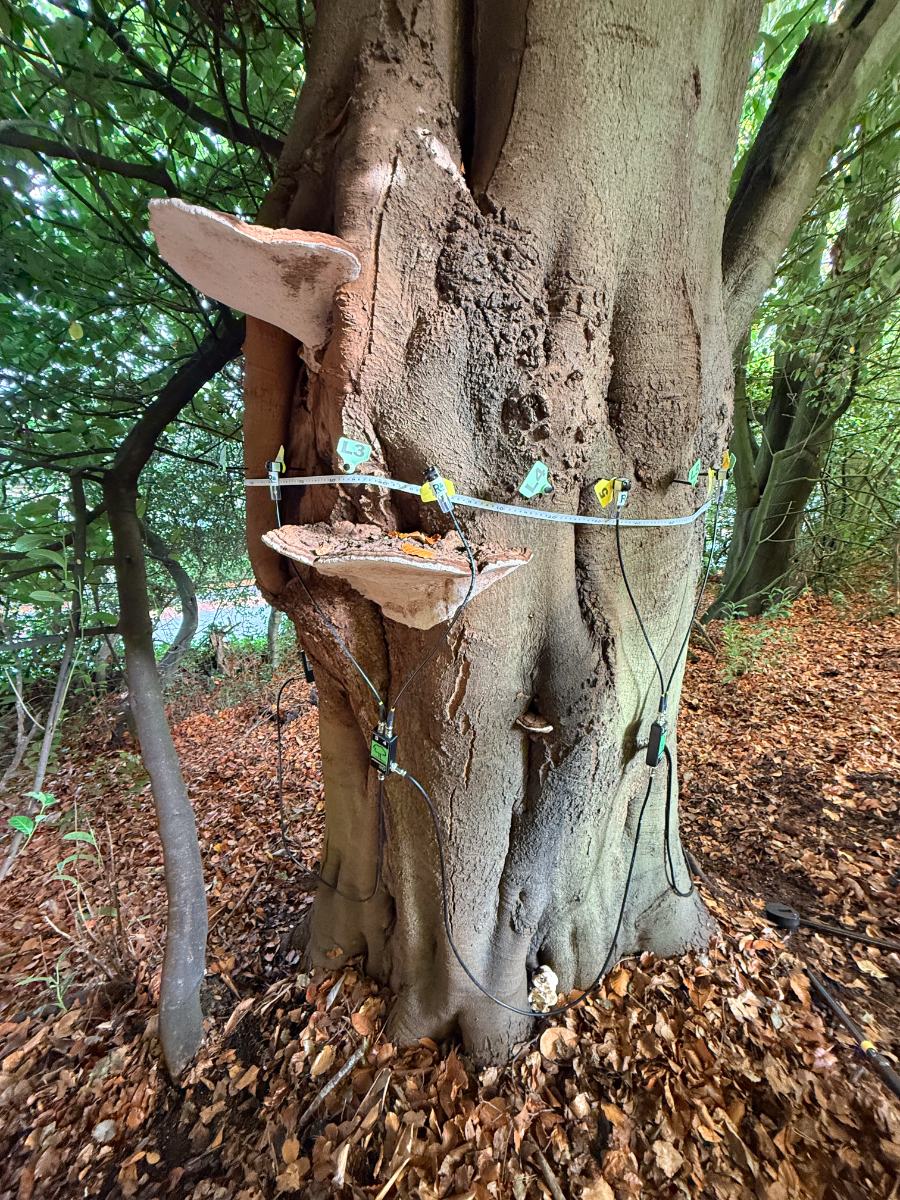
Sonic tomography is non invasive tree decay detection. Sensors are fitted around the stem, sound velocity through the wood is measured between every pair, and the result is a cross section showing where sound wood remains.
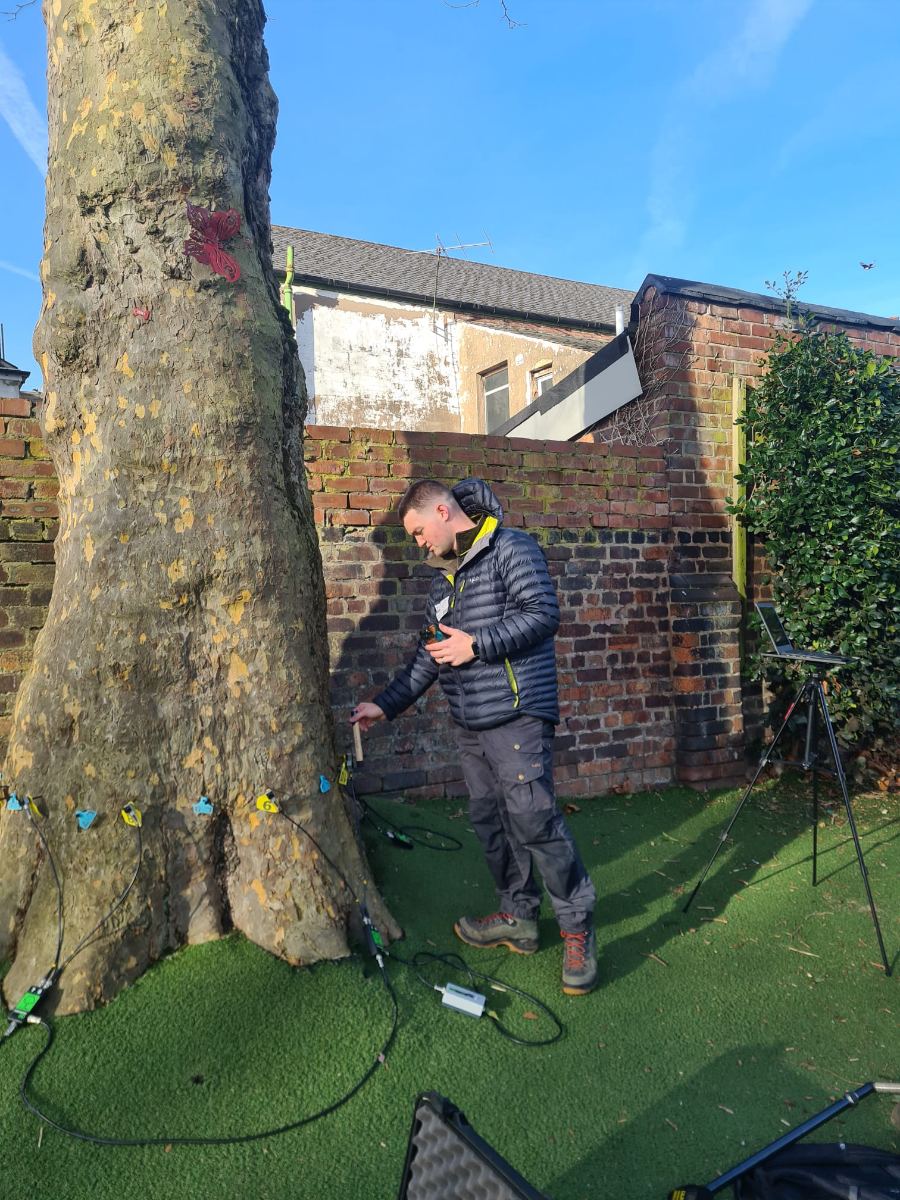
Sensors around the stem
Sensor pins are tapped through the bark at the scan height and sound velocity is measured between every pair. Nothing is drilled and nothing is removed.
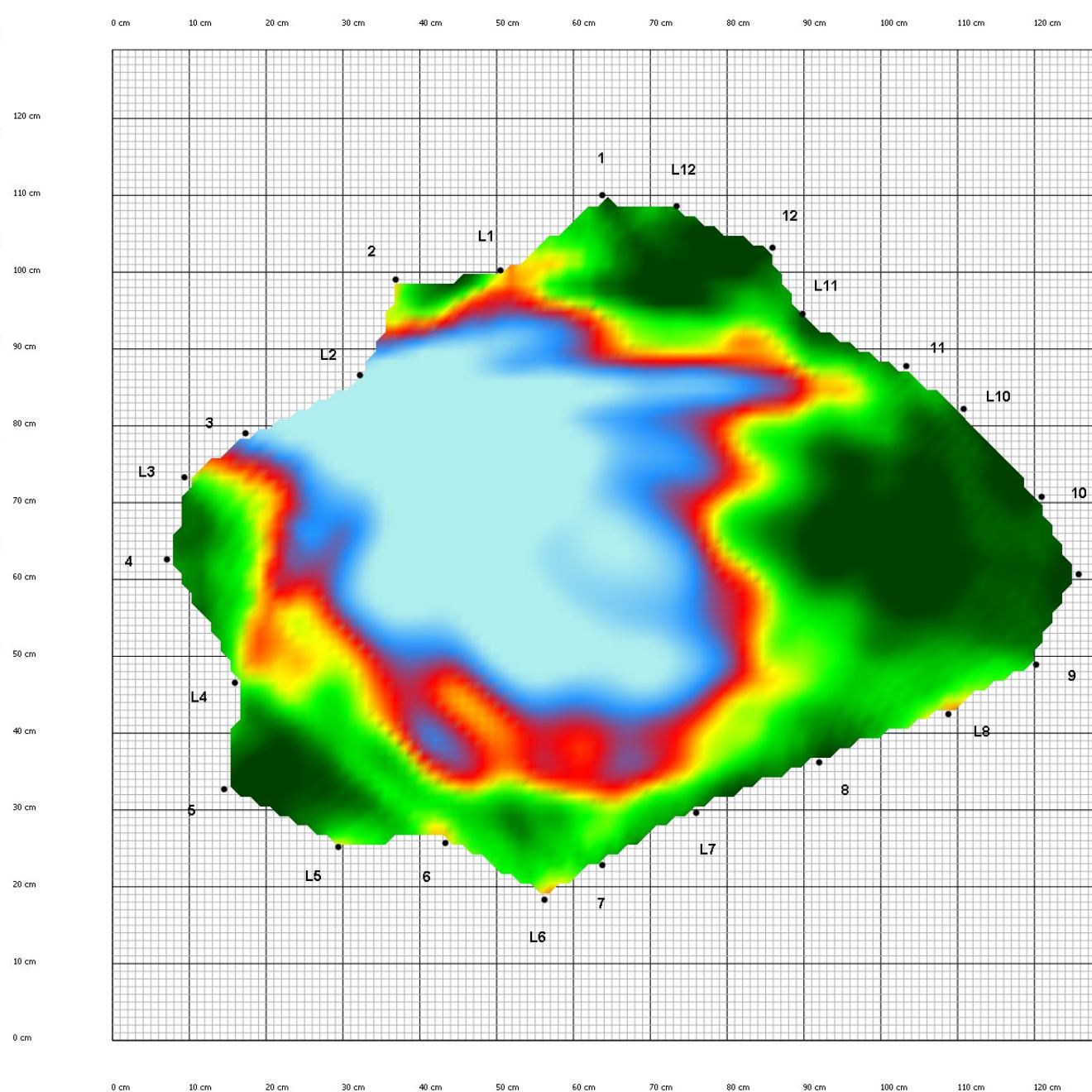
Where the sound wood is
Dark shades are sound wood. The pale core is where velocity has dropped, indicating decay or a cavity. Residual wall thickness is read straight off the section.
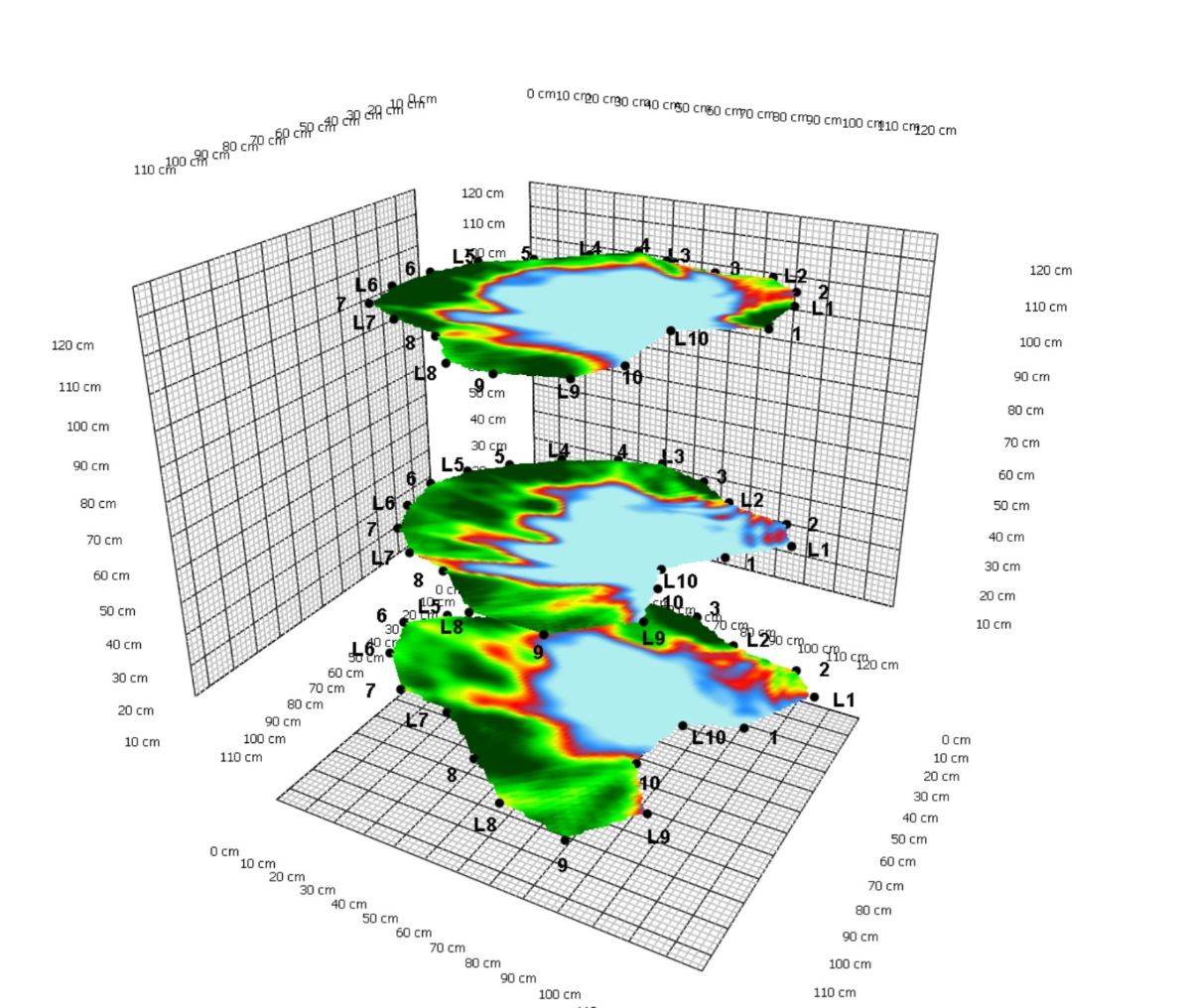
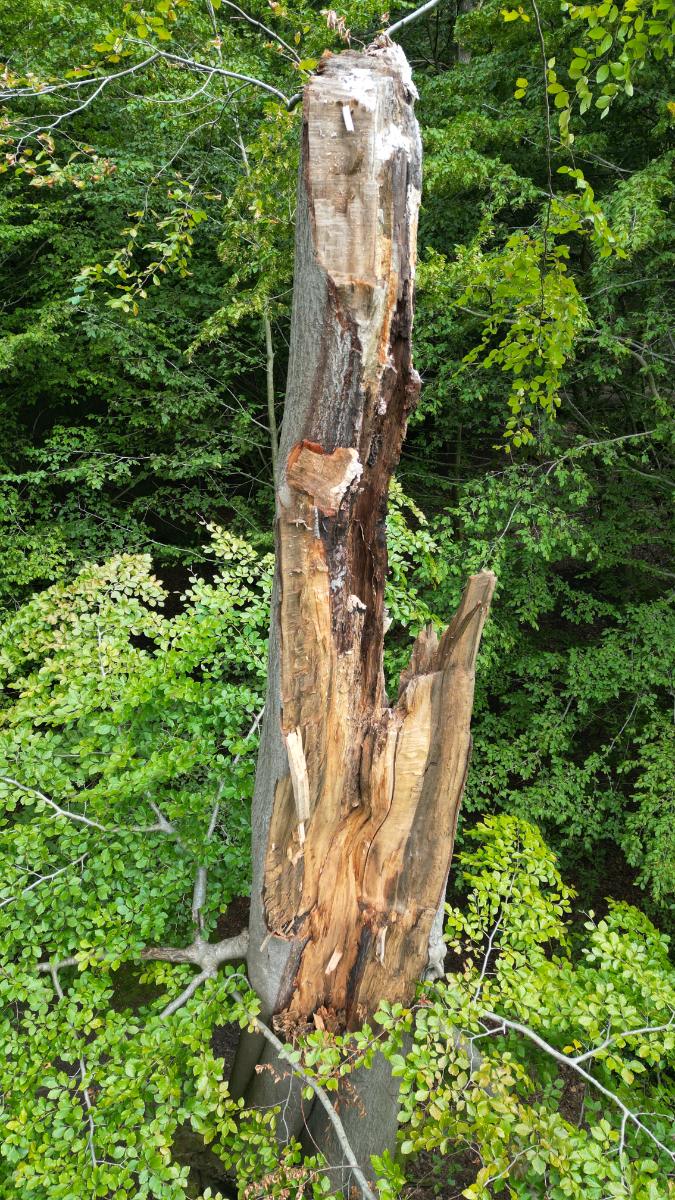
How far the column runs
Scanning at several heights shows whether the decay column is contained or extending, which is usually the difference between a reduction and a removal.
The point is not the picture. A retention decision made on a measured residual wall and a calculated safety factor can be defended, and a removal decision made the same way can be justified to a planning authority or an objector.
Questions we answer weekly.
If yours is not here, ask it directly. We would rather answer before you commission than after.
Ask a questionHow quickly can you get to site?
It depends on the season and what is already booked, so the quote carries a survey date rather than a promise up front. Urgent safety concerns and fixed planning deadlines are prioritised, so say so in your enquiry. Programme work is scheduled around your dates.
How often should trees be inspected?
There is no single correct interval. It depends on target occupancy, species, condition and site use. We set it per tree with the reasoning recorded, because after an incident the interval you chose is scrutinised as closely as the tree itself.
Will a survey mean I have to fell trees?
Frequently the opposite. Quantified assessment and instrumentation regularly retain trees that a precautionary visual judgement would have removed. Where removal is warranted, you get the evidence to support that decision too.
Do you work outside the North West?
Yes, for programme instructions. Day to day work covers Merseyside, Lancashire, Greater Manchester and Cheshire. Multi site work elsewhere is batched geographically to keep travel sensible, and priced as a programme rather than per visit.
Who carries out the survey?
A qualified arboriculturist, every time, and in house wherever possible. The practice is small enough that the person who inspected the tree is normally the person who writes the report and answers your questions afterwards.
How much does a tree survey cost?
It is priced per tree or per site, and you get a fixed price with the quote rather than an hourly rate. Three things move it: how many trees are in scope, what the report is for, and whether instrumentation such as sonic tomography is needed. Rolling annual programmes attract a lower rate than one off instructions.