

Tree condition surveys and tree inventories
Tree condition and inventory surveys from a single garden to an estate wide programme, captured as GIS data you keep and reuse.
From a single plot to a rolling authority programme, the survey method stays the same and only the scale changes. Positions are captured with RTK GNSS to within half a metre, condition is recorded against consistent definitions, and the whole thing comes back as data rather than a locked document.
A survey structured for GIS is an asset you update. The second year costs less than the first, and the trend across your stock becomes visible.
What the work involves.
How the data is captured
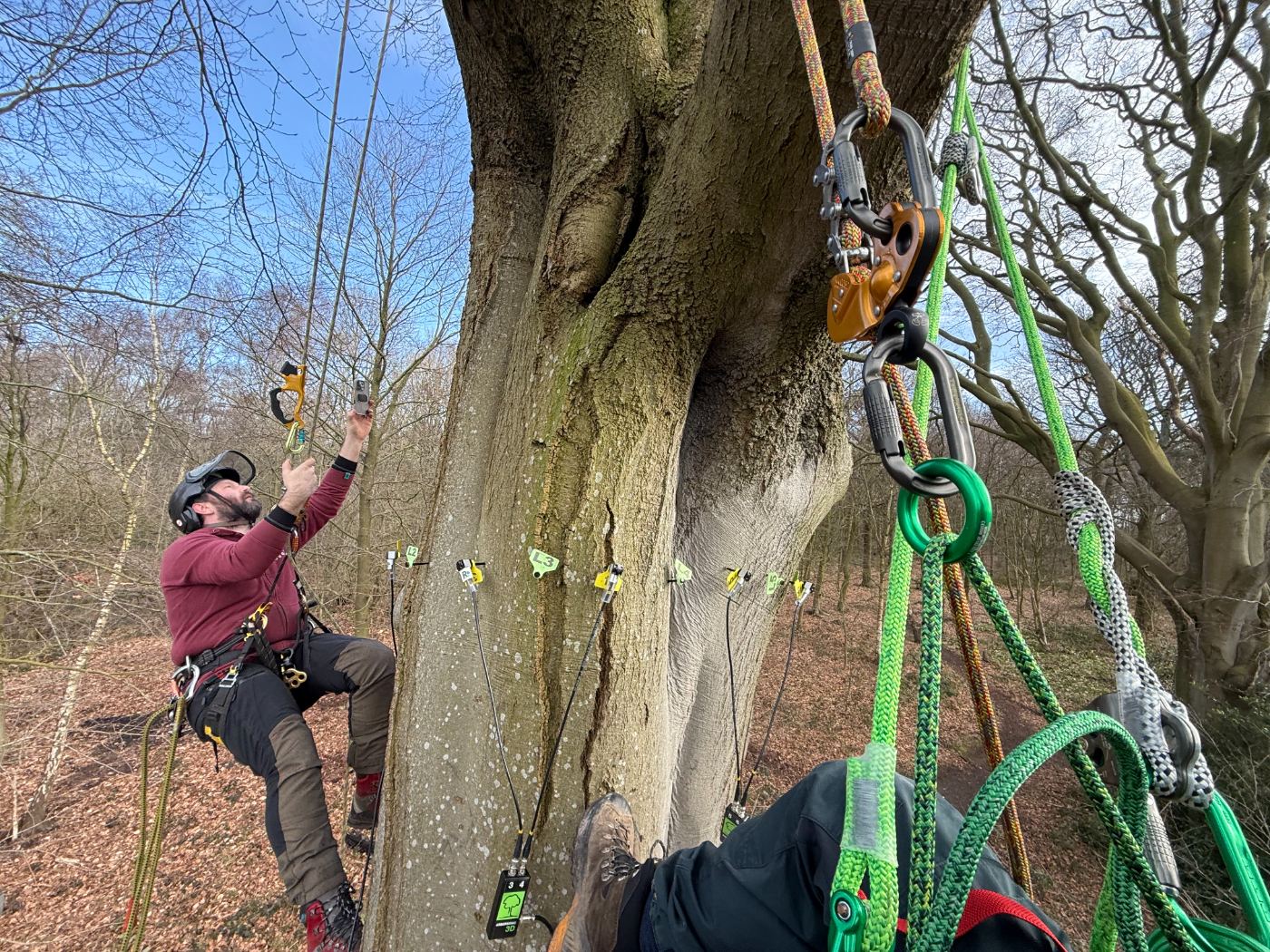
Assessment is ground based and follows Visual Tree Assessment principles. Heights are taken by hypsometer and stem diameters by tape, so nothing is estimated that can be measured, and records are entered live in the field rather than written up from notes afterwards. Every tree carries a position fixed by RTK GNSS to within half a metre, which is what makes the survey usable as a map instead of a list.
What comes back
A schedule of every tree with species, dimensions, condition, defects observed, recommended works and a priority. Works are grouped so they can be priced and let as a package, and a re-inspection interval is set per tree rather than applied across the site as a single figure. An A3 site map accompanies the schedule, and the underlying data is issued in your preferred GIS format.
Running it as a programme
Dispersed stock across hundreds of addresses is a data problem before it is an arboricultural one. Surveyed into a consistent structure, the second year is an update rather than a fresh start: works completed are closed off, condition changes are visible as a trend, and the inspection burden concentrates where it is earning its keep. Rolling annual programmes are priced accordingly.
New planting and establishment
Where trees have been planted as part of a scheme or a condition, BS 8545 establishment monitoring records whether they are taking. That matters when replacement planting was offered as mitigation in a planning submission and the authority expects evidence that it survived.
Questions about this service.
If yours is not here, ask it directly. We would rather answer before you commission than after.
Ask a questionWhat is the difference between a tree survey and a tree inventory?
An inventory records what you have: species, size, position and basic condition, as an asset register. A condition survey goes further and assesses each tree against defects, risk and recommended works, with a re-inspection interval. Most organisations need the inventory once and the condition assessment on a cycle.
Can you work from a survey we already have?
Usually yes, if the tree numbering and positions are sound. Updating an existing dataset is cheaper than resurveying from scratch, and it preserves the history that makes condition trends visible. Send us what you hold and we will tell you whether it is worth building on.
Tell us the site and the deadline.
You get a fixed price and a realistic survey date back, not a discovery call.